
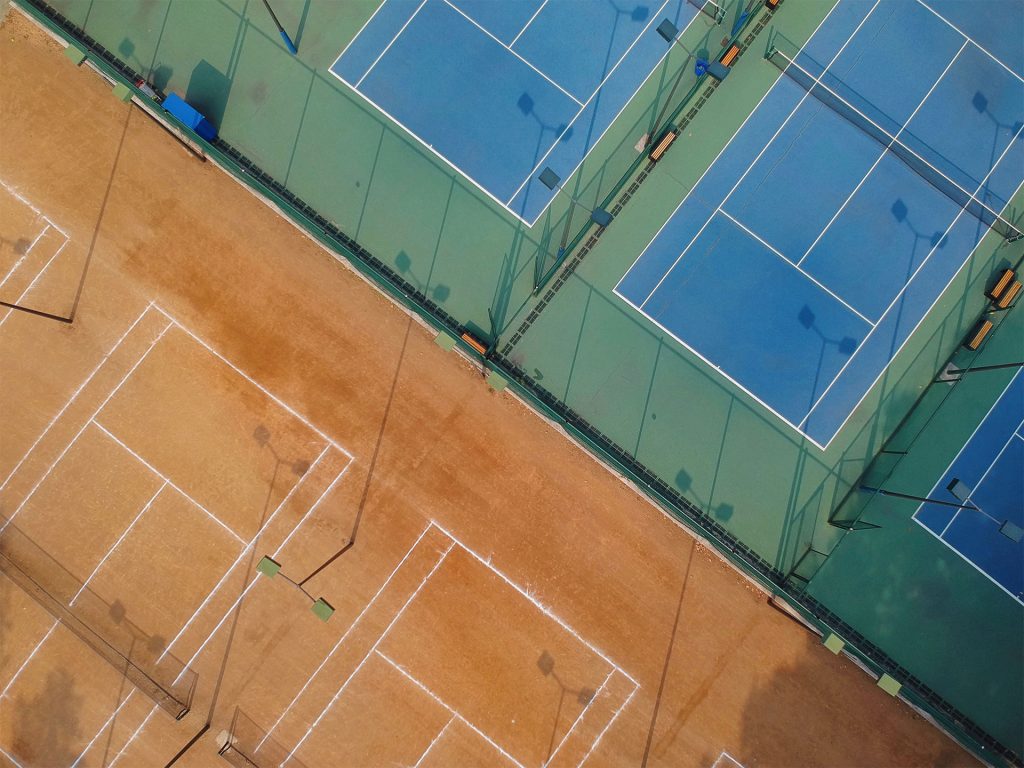
Choosing the right court surface is one of the most important decisions when building a tennis court. While asphalt courts are widely used, post-tension concrete courts offer enhanced durability and structural performance.
At Teague Moore Tennis, we help clients understand the long-term benefits of each surface option so they can make the best investment for their property and usage goals.
Why Consider Post-Tension Concrete?
Before selecting a surface, it is important to evaluate durability, maintenance, and long-term structural stability.
Durability
Post-tension concrete courts are more durable and long-lasting due to tensioned steel cables and poured concrete construction.
Crack Resistance
They resist cracking and structural damage more effectively than asphalt courts.
Weather and Temperature Resistance
Post-tension concrete is resistant to damage caused by temperature changes and varying weather conditions.
Maintenance
They offer lower long-term maintenance costs compared to many other types of tennis courts.
Playing Performance
Post-tension concrete provides a uniform, high-performance playing surface that helps the ball bounce at consistent speeds.
Structural Integrity and Warranty
Post-tension concrete courts are engineered with structural integrity in mind. Because of this reinforced design, they are built to last significantly longer than traditional asphalt courts.
These courts can come with a 20-25 year warranty covering structural failure, offering long-term confidence and peace of mind.
Summary
Post-tension concrete courts provide superior durability, improved crack resistance, and long-term structural stability compared to asphalt courts. While the upfront investment may be higher, the reduced maintenance needs and extended lifespan make them a strong long-term solution.
At Teague Moore Tennis, we guide clients through these considerations to ensure their tennis court is built for lasting performance and reliability.